
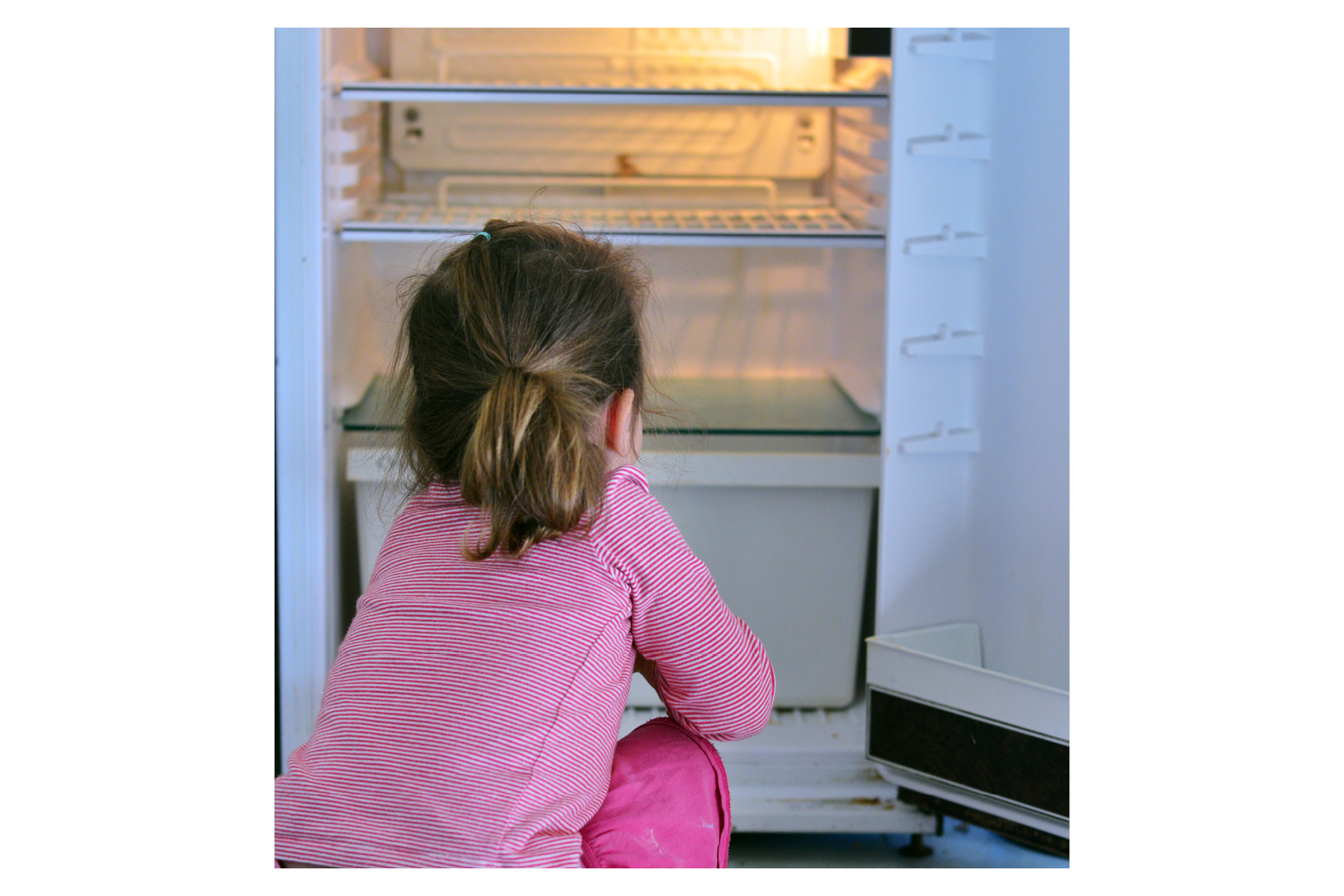
“Anyone who has ever struggled with poverty knows how extremely expensive it is to be poor” – James Baldwin
When most people think of Bellevue, they picture a thriving community filled with opportunity. Yet many local families struggle every day to put food on the table.
Childhood hunger is not something that happens “somewhere else.” It is happening here, in our schools, apartment buildings, and neighborhoods, impacting children’s health, learning, and well-being.
What factors lead families in Bellevue to run out of grocery money?
Families reach the point of food insecurity for many different reasons. For a family already living paycheck to paycheck, an unexpected expense like a medical bill, a sudden job loss, a high utility bill, or a rent increase can completely upend a family’s budget. Even minor expenses, like a parking ticket or a late bill fee, can force families to choose between food and other essentials, like rent payments.
Many parents who visit our Bellevue Family Hubs work multiple jobs, but still struggle to cover the high cost of living in Bellevue. Others are single parents balancing housing and childcare expenses on their own. We see immigrant families that face language barriers or employment limitations that make it challenging to secure a consistent income. And for households with very young children or aging family members, caregiving responsibilities can limit the ability to work full-time.
Hunger is rarely the result of a single event. It’s often the cumulative weight of systems, circumstances, and costs stacking up faster than families can manage.
What the numbers tell us
In the Bellevue School District, one in four students lives below the poverty line and is registered for the free and reduced-price meal program at their school. That means thousands of students lack consistent access to the food they need to focus in the classroom.
The USDA Child Nutrition Program Income Eligibility Guidelines outline that for a family to qualify for assistance, including free or reduced-price meals for their children, a family of three must have an annual income of $34,645 or less. A household of five must earn $48,945 or less.
These numbers paint only part of the picture. Many families earn just above the eligibility limit, yet still face overwhelming financial pressure. With the rising cost of living, especially here on the Eastside, even families with full-time jobs often find themselves trapped in a cycle of not quite qualifying for assistance but struggling nonetheless.
Families often remain in place and are unable to move out of Bellevue because they can’t afford the upfront expenses, including first and last month’s rent and a security deposit.
As Baldwin noted, poverty is a costly burden. Late fees, high-interest credit, housing instability, and chronic stress all compound financial strain, and food insecurity is often one of the first signs.
Bellevue LifeSpring’s role and why it matters to all of us
Bellevue LifeSpring provides nutrition support to more than 5,000 students, including early learners enrolled in the district. Our Breaktime-Mealtime grocery store food vouchers ensure students walk into school ready to learn.

Childhood hunger doesn’t just affect one family; it can have lasting effects on our entire community. Over time, the challenges that come with community members experiencing hunger ripple outward, resulting in weaker educational outcomes and limiting the future workforce and leaders that Bellevue depends on.
The good news is that hunger is a problem we can solve together.
When a community steps up to support families facing hard times, powerful things happen. A child arrives at school with a full stomach and a clear mind. A parent can focus on work knowing dinner is taken care of. A family regains stability and hope. These moments build a stronger Bellevue, one where every child has the chance to succeed.
Childhood hunger is not an unsolvable crisis. It is a call to awareness, compassion, and action.